

Brown Wood Owls Successfully Breed Again at KFBG
Last Spring, a pair of Brown Wood Owls (Strix leptogrammica ticehursti) bred at KFBG, and this year, we were delighted to witness them once again breeding successfully on our hillside, and this time with two chicks! We followed both chicks for several weeks from when we estimated that they were about three weeks old. They grew into healthy young birds and fledged successfully in May. Their presence brings additional vitality to the maturing forest on our hillside, adding a precious silhouette to the night.
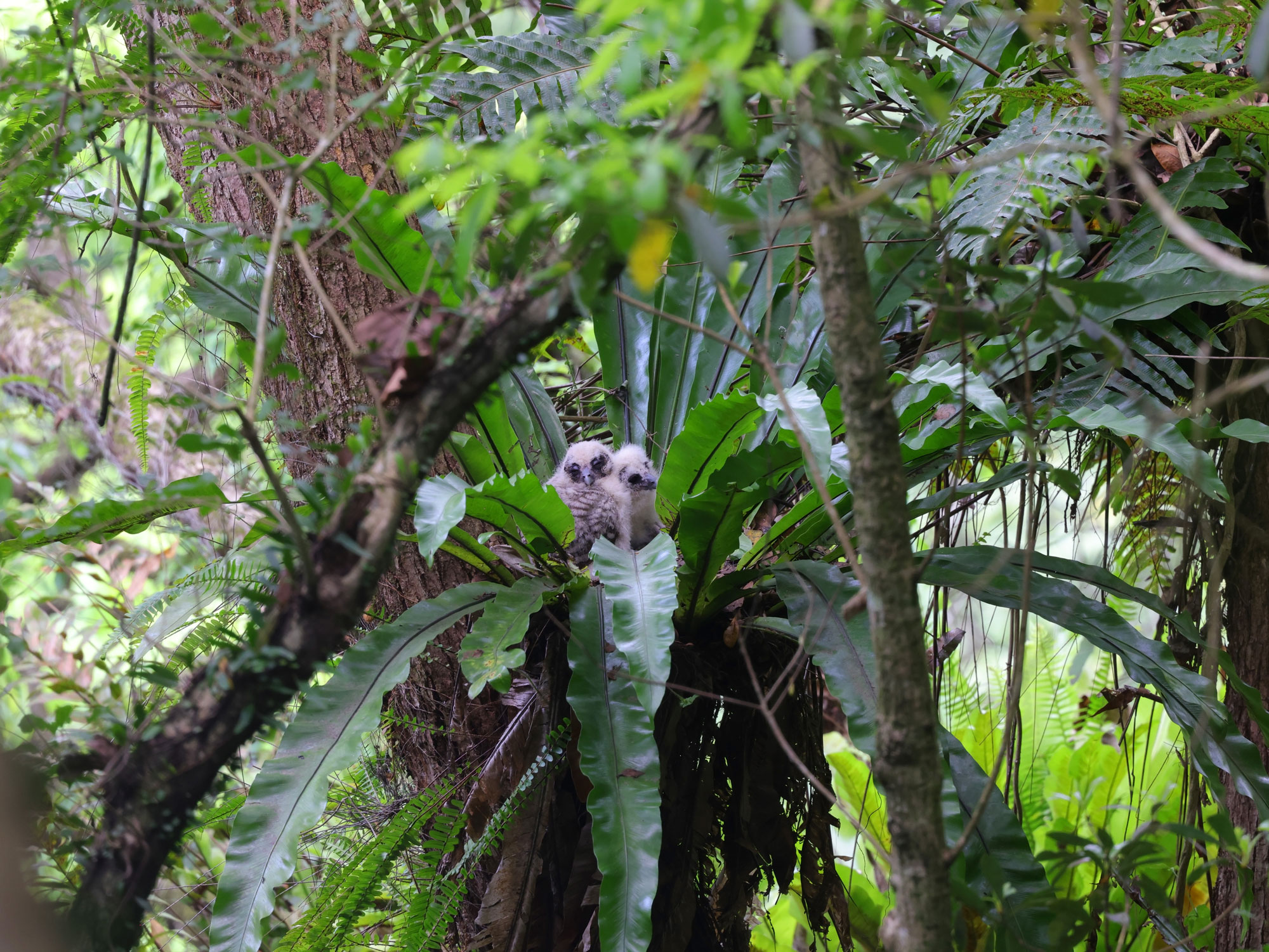
When first discovered, the two owl chicks seen snuggled closely together
Brown Wood Owl Profile
The Brown Wood Owl is a large nocturnal raptor, measuring approximately 39-55 cm in length with a wingspan of 125-167 cm. It is striking in appearance: a deep brown upper body accented by white scapular stripes, no ear tufts, large dark eyes, a facial disc with dark margins, and a pale brownish underpart densely marked with fine dark bars. Its call is deep and resonant, often a rhythmic “hoo hoo-hoo-hoo” of three to four notes. The owls occasionally give an eerie, chilling wail that resembles a ghostly cry.
In Hong Kong, Brown Wood Owls are mainly found in forested areas at low to mid-elevations in the New Territories, such as the mature secondary forests and fung shui woods at Tai Po Kau, Kap Lung and Lam Tsuen Valley. The Brown Wood Owl is a relatively recent arrival to Hong Kong: the first record was a call heard in Tai Po Kau in 2006; the first photo record was taken in 2007; and confirmed breeding records began in 2009 (Lewthwaite & Pang 2023). Experts believe they naturally expanded into Hong Kong from southern China over the past two decades, but their current population here remains small.
As a top nocturnal predator in the ecosystem, their presence is an important indicator that Hong Kong’s forests are becoming increasingly mature. While records of juveniles have appeared in recent years, only about four breeding sites have been located across Hong Kong to date, and there had previously been no detailed observations of adults incubating eggs or raising young.
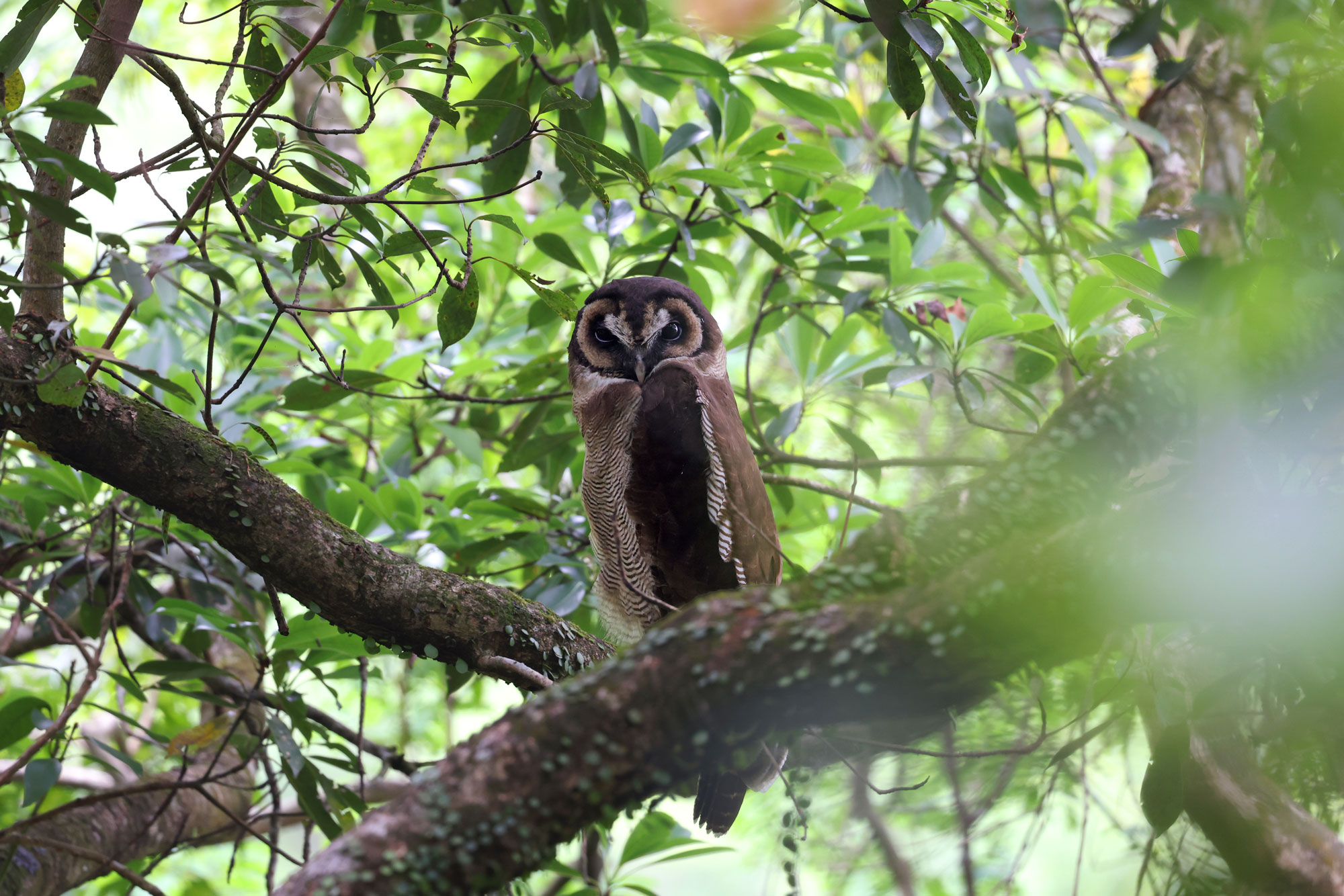
Unlike the wholly white chicks, the adults are predominantly brown in colour and have a striking appearance
An Unexpected Discovery and Discreet Observation
The story began during a routine ecological monitoring exercise on the KFBG hillside. In early April, our monitoring team noticed unusual activity in a Bird’s nest fern high on a tall camphor tree. Looking through binoculars, the team discovered two fluffy white chicks with sleepy eyes. At the time, the chicks were about three weeks old and were resting quietly in the nest.
After the discovery, the team conducted observations with minimal disturbance, using infrared cameras, acoustic recording, and observations with binoculars at long-distance. During the early period of observation, the chicks spent most of their time resting in the nest or curiously peering out through the leaves. The parent birds patiently remained on nearby branches during the day and only went out to hunt after dark, bringing food back for the young.
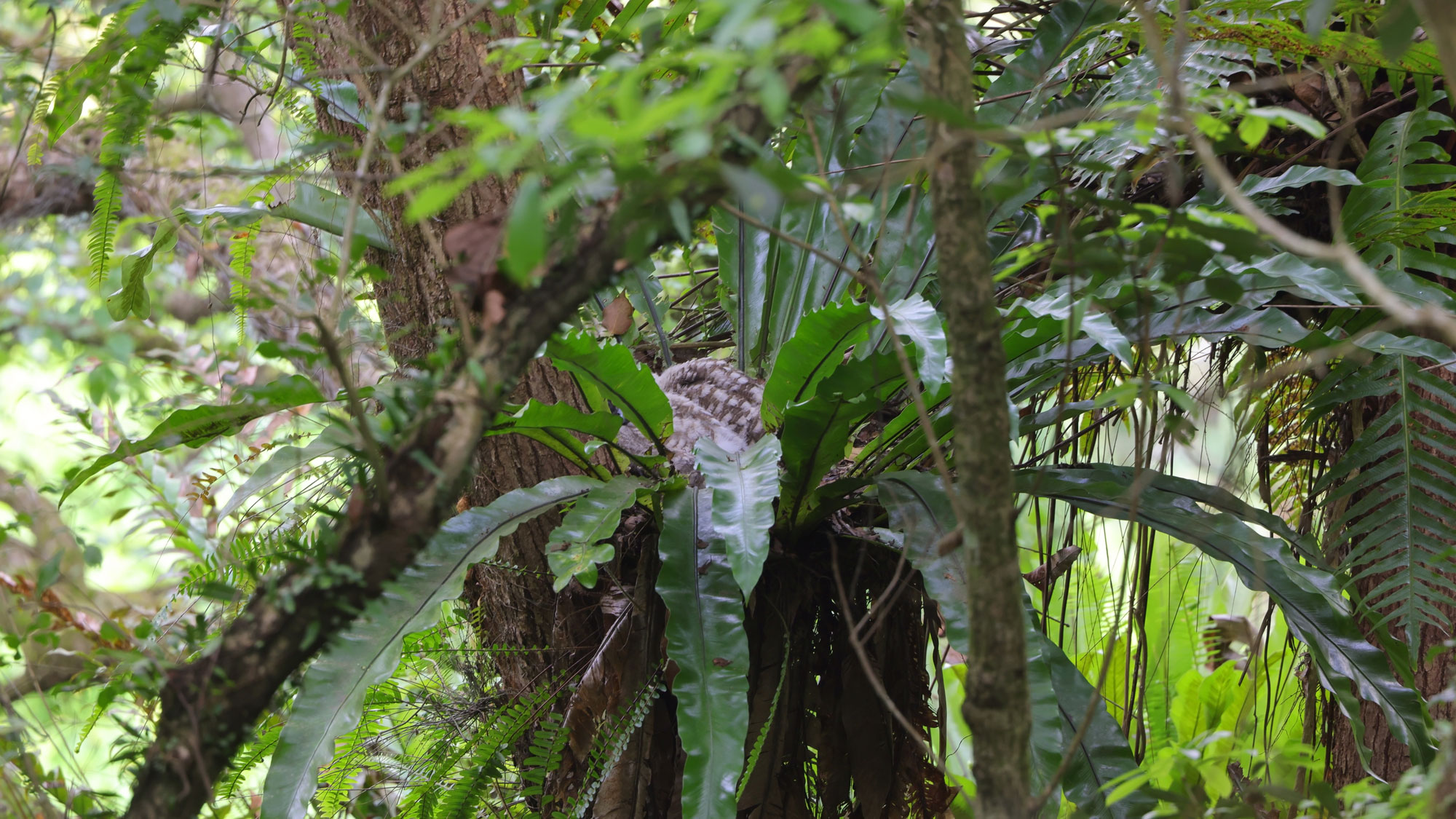
When sleeping, the chicks lowered their heads and bodies, leaving only their backs visible to the team. Photo taken on day 10 of observation.
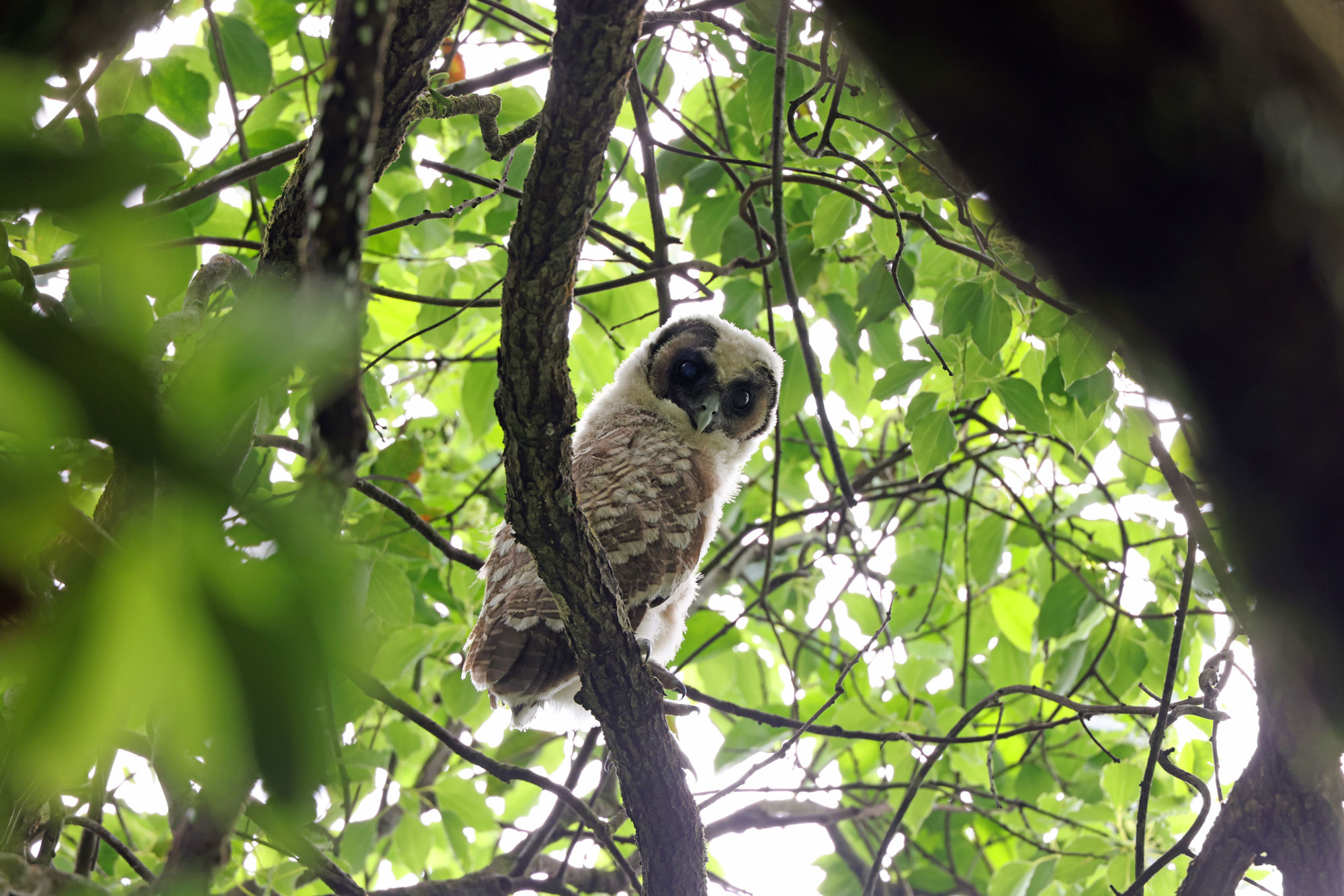
On the 14th Day of observation, one of the chicks climbed from the nest to a higher position in the canopy
In late April, the first chick began to leave the nest and climb among the branches. A few days later, the second chick followed. On the same day, a Red-billed Blue Magpie appeared nearby, prompting the parent owls to issue alarm calls and glide in to drive it away. Fortunately, both chicks remained safe. During the following days, both chicks stayed within the canopy of the same nesting tree but did not return to the nest. By early May, after the monitoring team’s final sightings of the chicks, they were no longer seen near the nest. To check whether the chicks had fallen to the forest floor, the team thoroughly searched the area below the nest. Thankfully, no chicks were found, suggesting they had followed the adults to other areas away from the nesting tree.
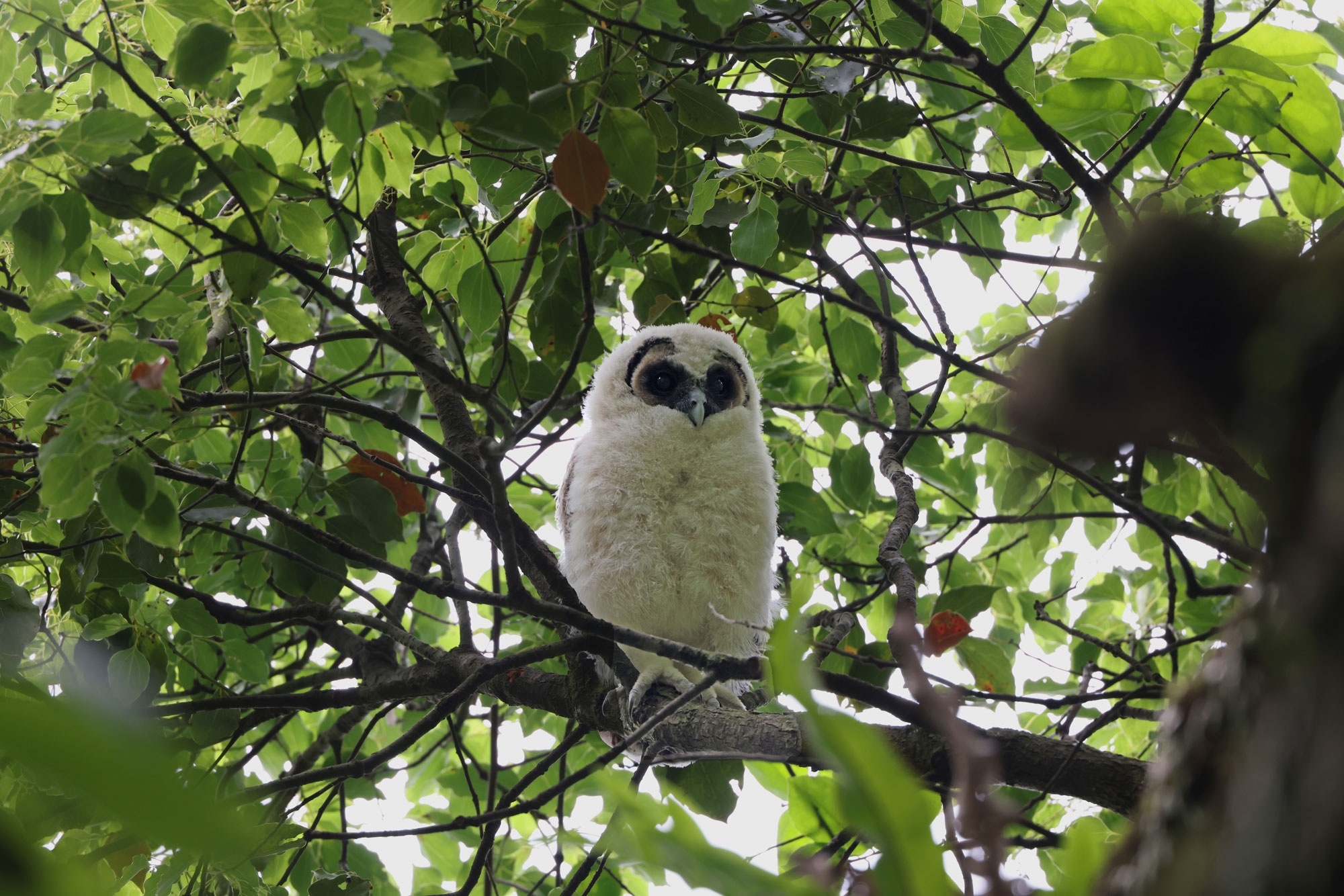
The fluffy and curious young chick!
Achievements of KFBG’s Forest Restoration
Occasionally, Brown Wood Owls have bred at KFBG; over the past years, juveniles have been spotted during the breeding season in spring. This occasion marks the first time we have discovered their actual nesting site. The fact that this pair chose to nest at KFBG reflects that our maturing forest provides ideal nesting sites and abundant food resources — the best affirmation of KFBG’s long-term efforts in forest restoration and conservation management.
In March 2020, several pellets (undigested material regurgitated by birds) of this species were discovered on KFBG’s hillside, and they enabled an insight into some of the bird’s preferred diet. More details can be read at the link (https://www.kfbg.org/en/KFBG-blog/post/Whats-on-a-Brown-Wood-Owls-menu)
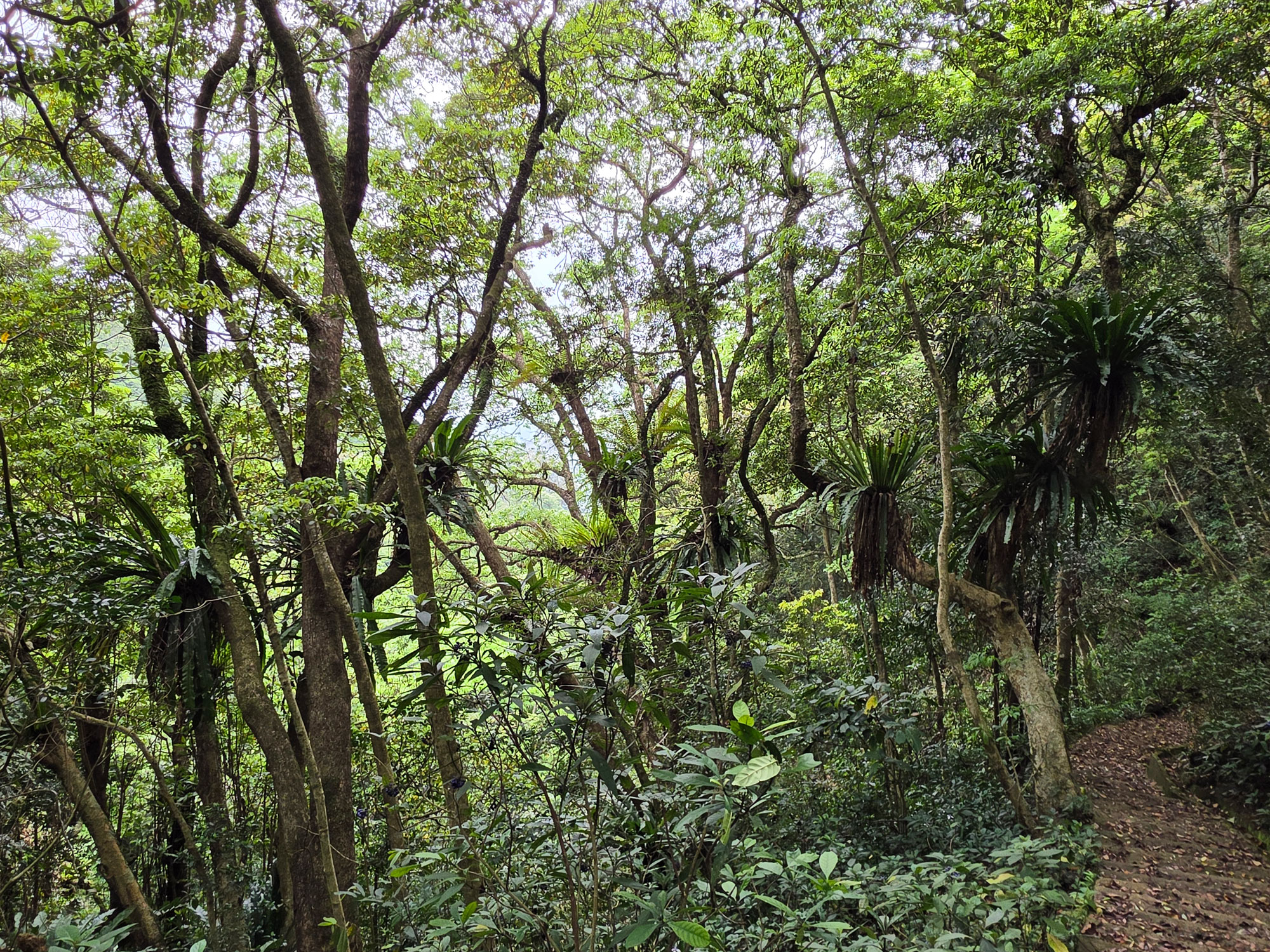
Large Bird’s nest ferns (Neottopteris nidus) are quite abundant at KFBG
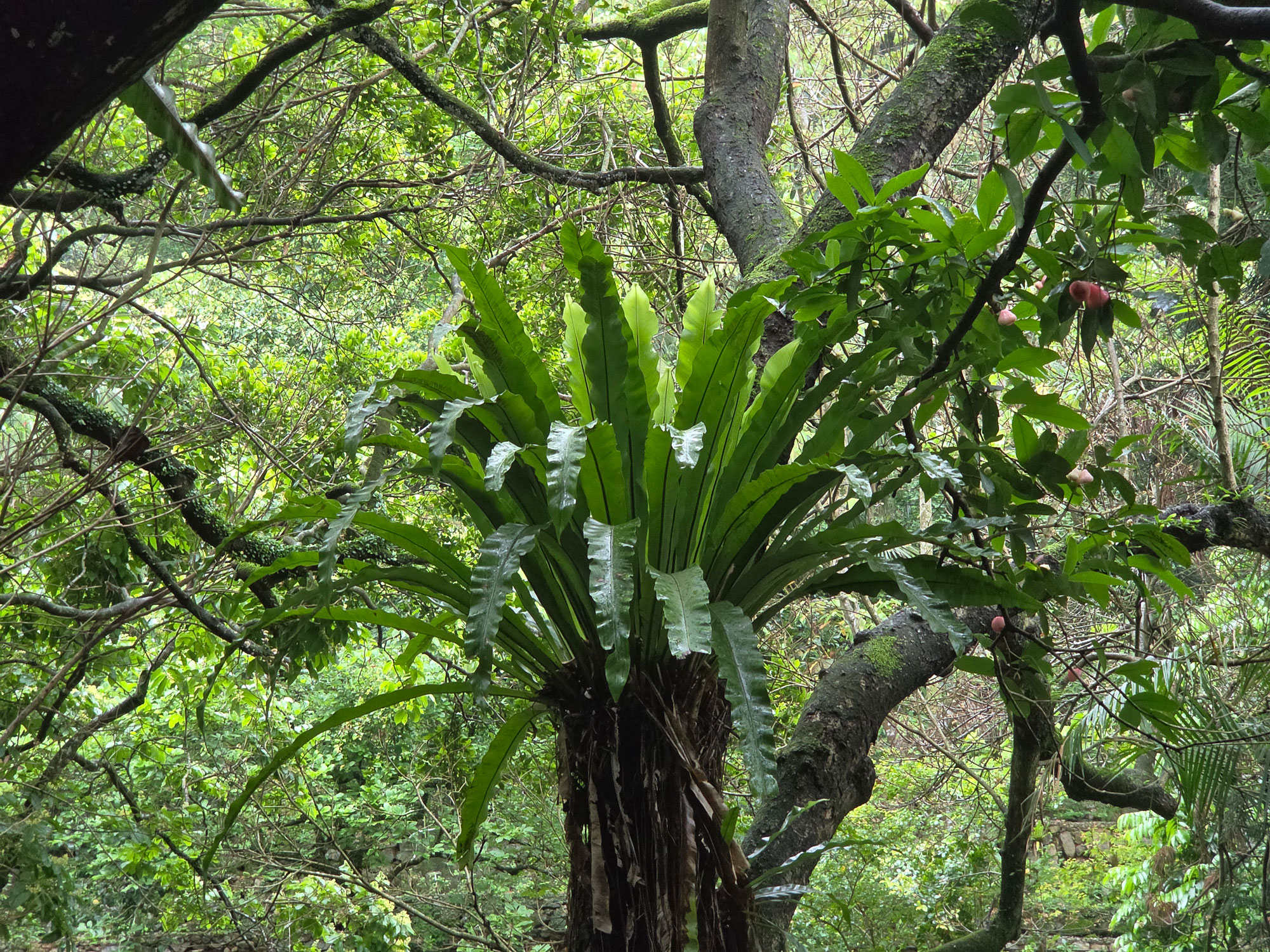
Bird's nest fern (Neottopteris nidus)
New Hope in the Night Forest
Over these weeks, we watched the chicks transform from snow-white downy birds into full juvenile plumage, their facial discs gradually taking shape, and their activity range expanding from the nest to the entire tree canopy as they practiced flying and balancing. These subtle changes were both endearing and deeply moving, showcasing the resilient and graceful tenacity of natural life.
While we rejoice in the successful growth and the safe fledging of the two chicks, we also hope they will thrive in the future and that the Brown Wood Owl population can flourish in Hong Kong’s forests. This is not just a single breeding event, but a vivid sign of the positive ecological recovery of both KFBG and Hong Kong’s native forests as a whole.
We welcome you to visit KFBG in person to experience our vibrant mountain Kwun Yum Shan and the forest it supports, and we hope you will join us in supporting local biodiversity conservation efforts. If you are lucky, you may even spot or hear a Brown Wood Owl!
Reference:
Lewthwaite, R. W. & Pang, C. C. (2023) Brown Wood Owl Strix leptogrammica, version 1.0. In The Avifauna of Hong Kong (Carey, G. J., Editor). Hong Kong Bird Watching Society, Hong Kong China