

Lantau Otter Conservation Project

Conservation and Research - Fauna Conservation
The Eurasian Otter is the only one of China’s three native otter species found in Hong Kong. It has an exceptionally broad geographic distribution, spanning Eurasia and reaching into northern Africa. This species is marked by brown to dark-brown fur along its back and paler fur on its chin and belly; a long, stout neck; and a muscular, tapering tail.
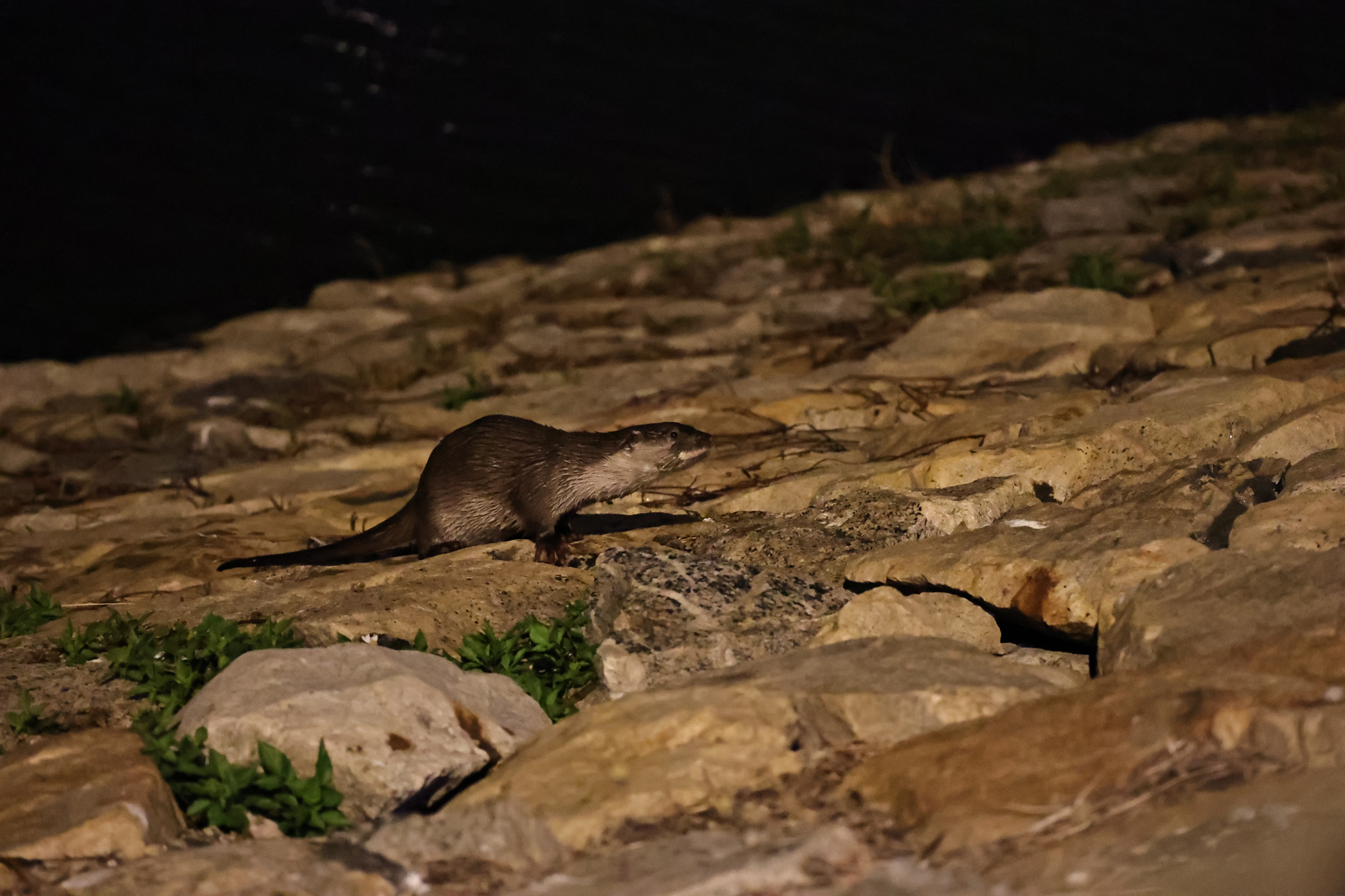
Eurasian Otter in Kinmen. Photo Credit: Aiko Leong
Guangdong was once one of China's leading sources of otter pelts. However, decades of intensive hunting drastically reduced their populations. Today, within the Greater Bay Area, wild Eurasian Otters survive in only a few remaining localities: Huizhou (Huidong, Boluo), Zhuhai (Qi'ao, Gaolan and Hengqin Islands), Macao and Hong Kong.
Eurasian Otter Fact Sheet
|
Common Name |
Eurasian Otter |
|
Scientific Name |
Lutra lutra |
|
Local Folk Names |
Water cat, Fish cat, Otter cat, Water dog, Water ghost, River water ghost, Water monkey |
|
Total Body Length |
86-120 cm (Head-to-body length: 56-80 cm; Tail length: 30-40 cm) |
|
Body Weight |
4-8 kg |
|
Lifespan |
5-10 years in the wild; up to 12 years in captivity |
|
Habitats |
Wetlands, rivers, lakes, ponds, streams, mangroves, coastal areas and artificial channels |
|
Diet |
Carnivorous (opportunistic predator); primarily feeds on fish, but also preys on crustaceans, amphibians, reptiles, and bird eggs, occasionally taking small mammals and birds |
|
IUCN Red List Status1 |
Near Threatened |
|
Red List of China's Vertebrates Status2 |
Endangered
|
|
Hong Kong Status3 |
High Risk of Local Extinction |
Behaviour & Habits
The Eurasian Otter is the vital apex predator in the wetland ecosystems. Fish form the foundation of their diet. As they rely on freshwater for drinking and washing their coats, they are closely tied to wetland environments, frequently utilising rivers, lakes and even artificial fishponds. Like fishermen, they also go out to coastal waters and mangroves to catch fish before hauling their prey back to shore.
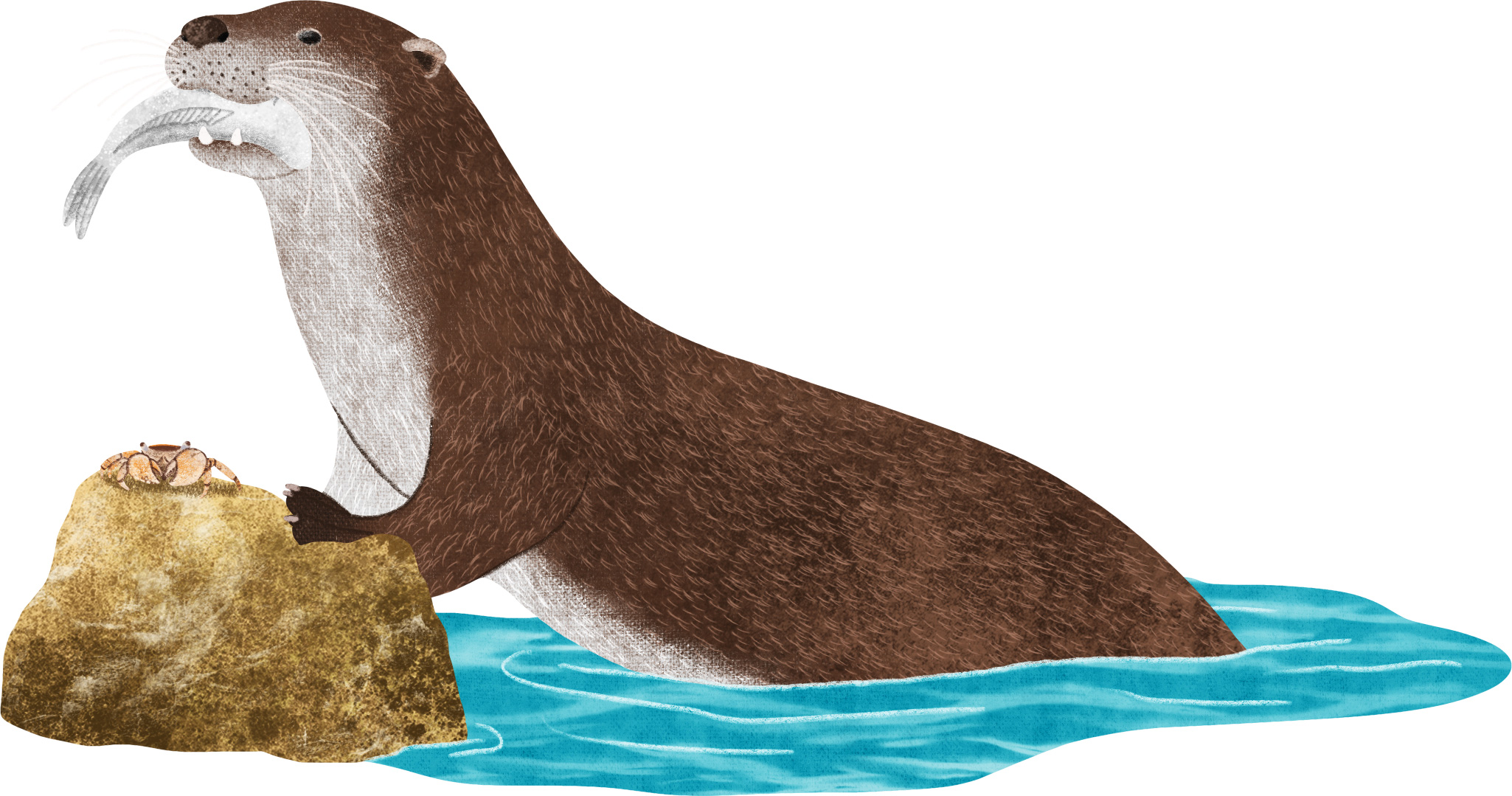
As naturally gifted swimmers, their streamlined bodies allow them to efficiently catch prey in the water. These animals are primarily nocturnal, spending most daylight hours resting inside dens. Solitary by nature, individuals rarely travel together, with males and females coming together only during the breeding season. A female otter typically gives birth to a litter of two to three pups, raising them single-handedly until they become independent at 12 to 15 months old.
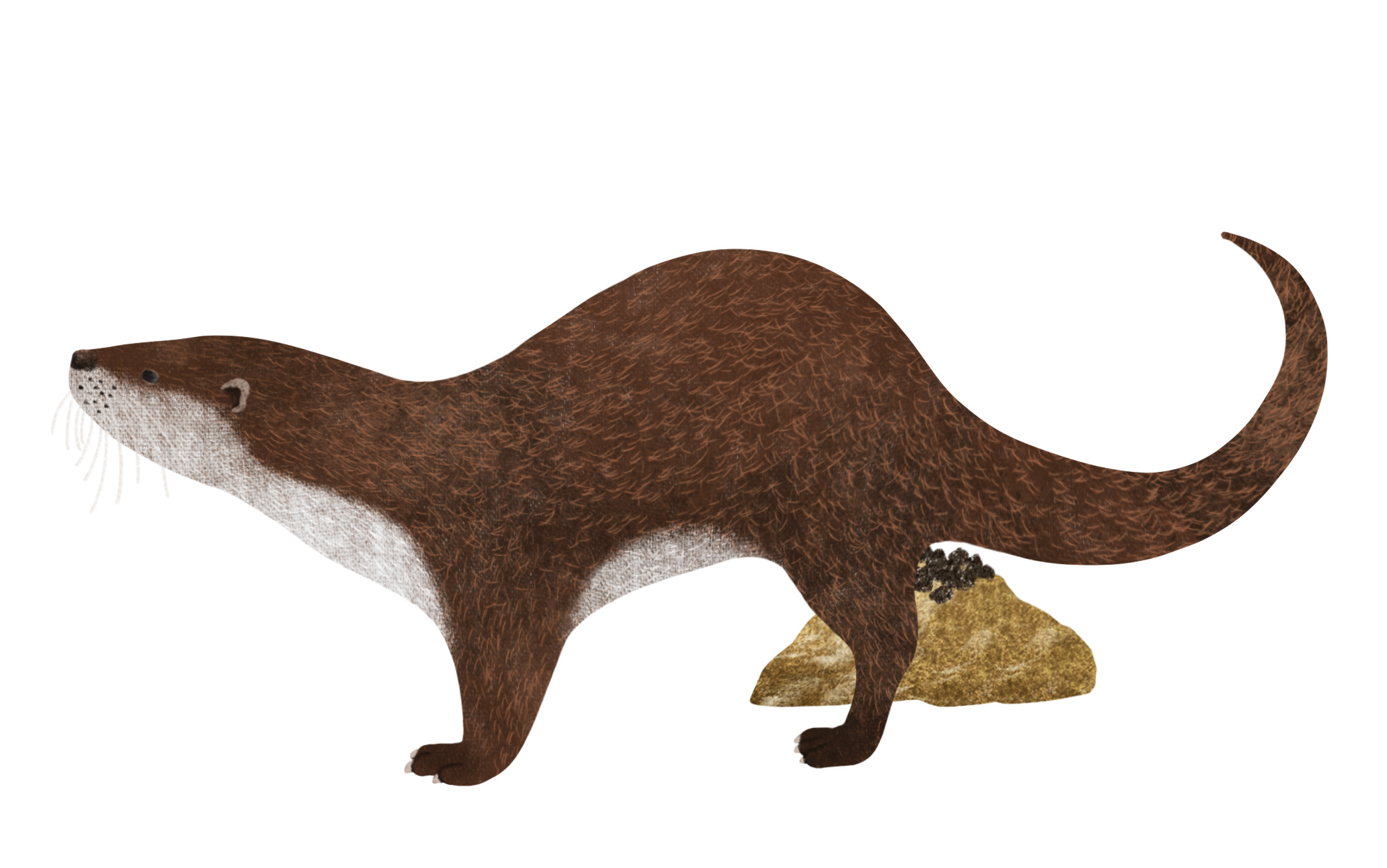
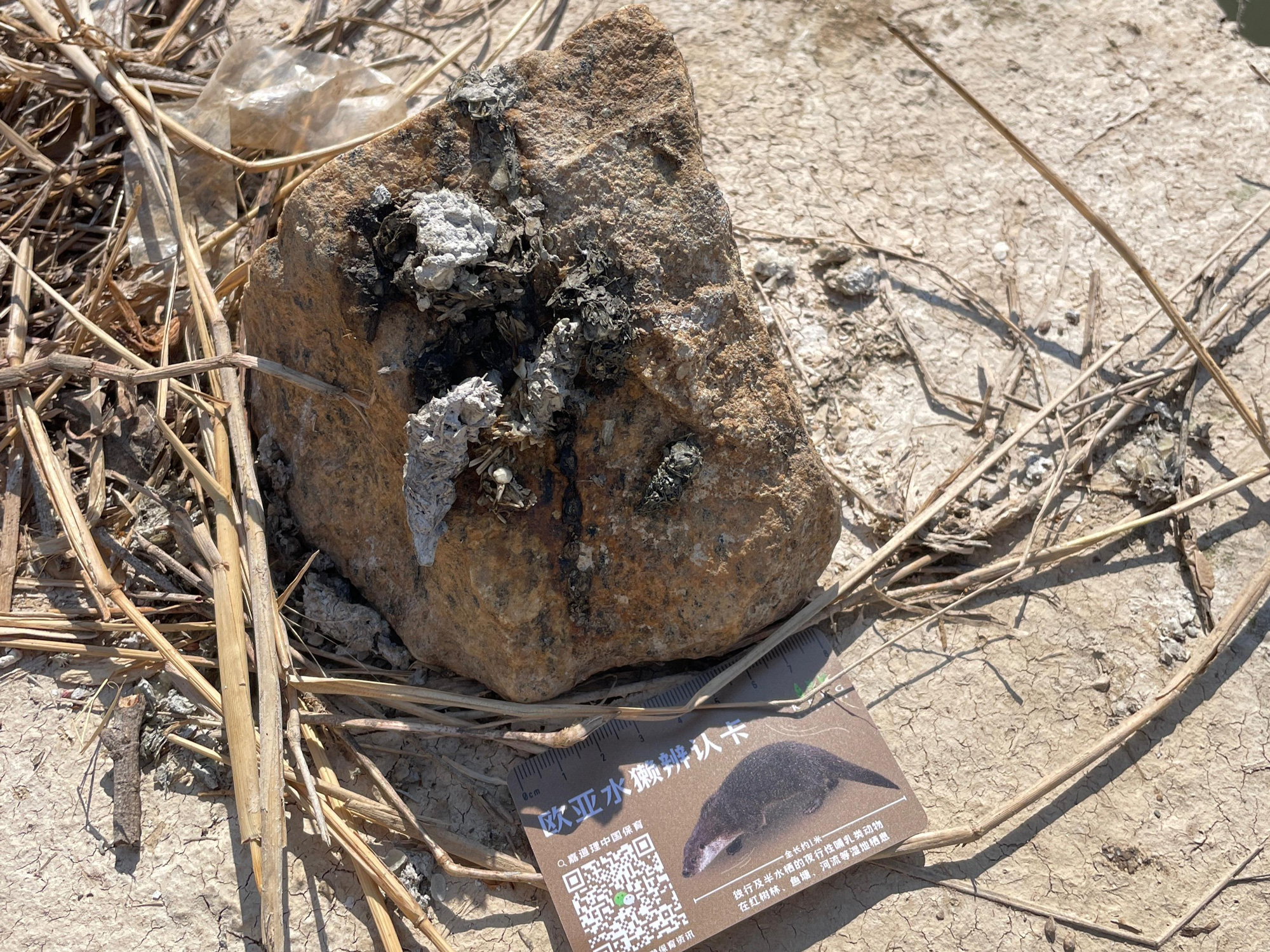
Eurasian Otters are strongly territorial, though territorial defence primarily occurs between individuals of the same sex. They mark their territories using spraint (faeces) and a black, mucus-like anal secretion, using scent posts as a complex communication system, transmitting far more than boundary lines, including individual age, sex and reproductive status.
Reference:
- IUCN (2026). The IUCN Red List of Threatened Species. Version 2024-2. https://www.iucnredlist.org
- Chinese Academy of Sciences (2023). Red List of China's Vertebrates. https://ww.mee.gov.cn/xxgk2018/xxgk/xxgk01/202305/120230522_1030745.html
- Or, C.K.M. & Chan, B.P.L. (Eds.)(2025) The State of Hong Kong's Biodiversity 2025. WWF-Hong Kong. 65pp
https://www.wwf.org.hk/en/biodiversity/hkbiodiversity2025/ - Erlinge, S. (1968). Territoriality of the Otter Lutra lutra Oikos, 19(1), 81–98. https://doi.org/10.2307/3564733
- Li, F. & Chan, B.P.L. (2018). Past and present: The status and distribution of otters (Carnivora: Lutrinae) in China. Oryx, 52(4), 619–626. https://doi.org/10.1017/s0030605317000400
Related article: