

Lantau Otter Conservation Project

Conservation and Research - Fauna Conservation
Otters were once abundant across China. Looking at historic pelt trade statistics, during the height of the otter pelt trade, tens of thousands of pelts were officially traded in China annually in the 1950s, with Guangdong Province alone producing over 10,000 pelts, accounting for a quarter of the nation's total! While this reflects a staggering level of exploitation, it also highlights just how many otters were once present in the region to support such a massive trade.

Situated at the eastern mouth of the Pearl River Delta, Hong Kong was also once a stronghold for otters. According to KFBG’s study, Eurasian Otters (Lutra lutra) were widely distributed across the western waters of Hong Kong, ranging from the developed coastlines of Hong Kong Island all the way to the wetlands of Inner Deep Bay in the New Territories. On Lantau in particular, otters had been documented since at least the 1930s. However, signs of decline were already emerging by that time, and despite receiving legal protection since 1936, the otter population underwent a precipitous decline and has been on the verge of extinction in Hong Kong since the 1960s. This same decline was also experienced on Lantau Island.
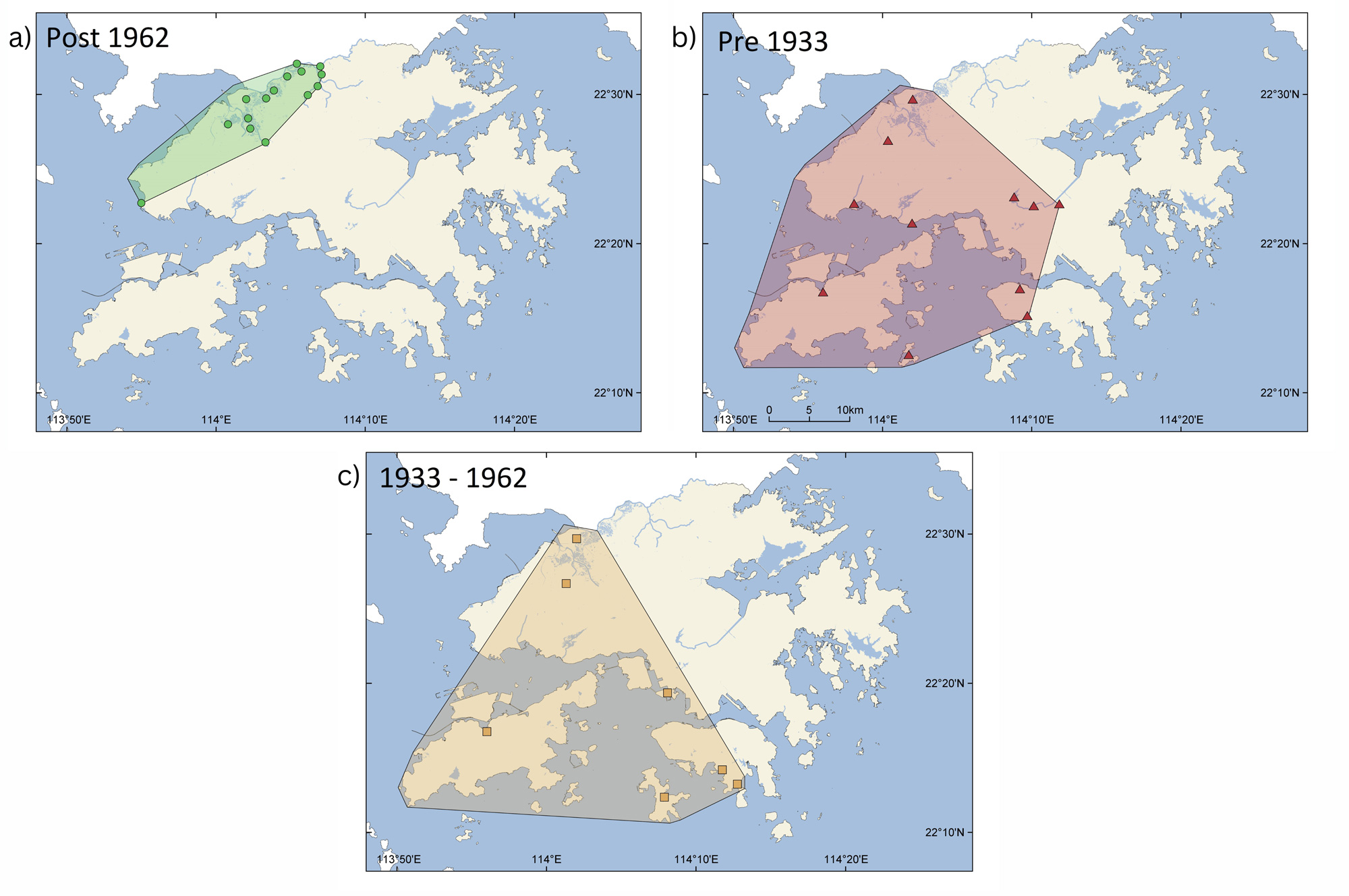
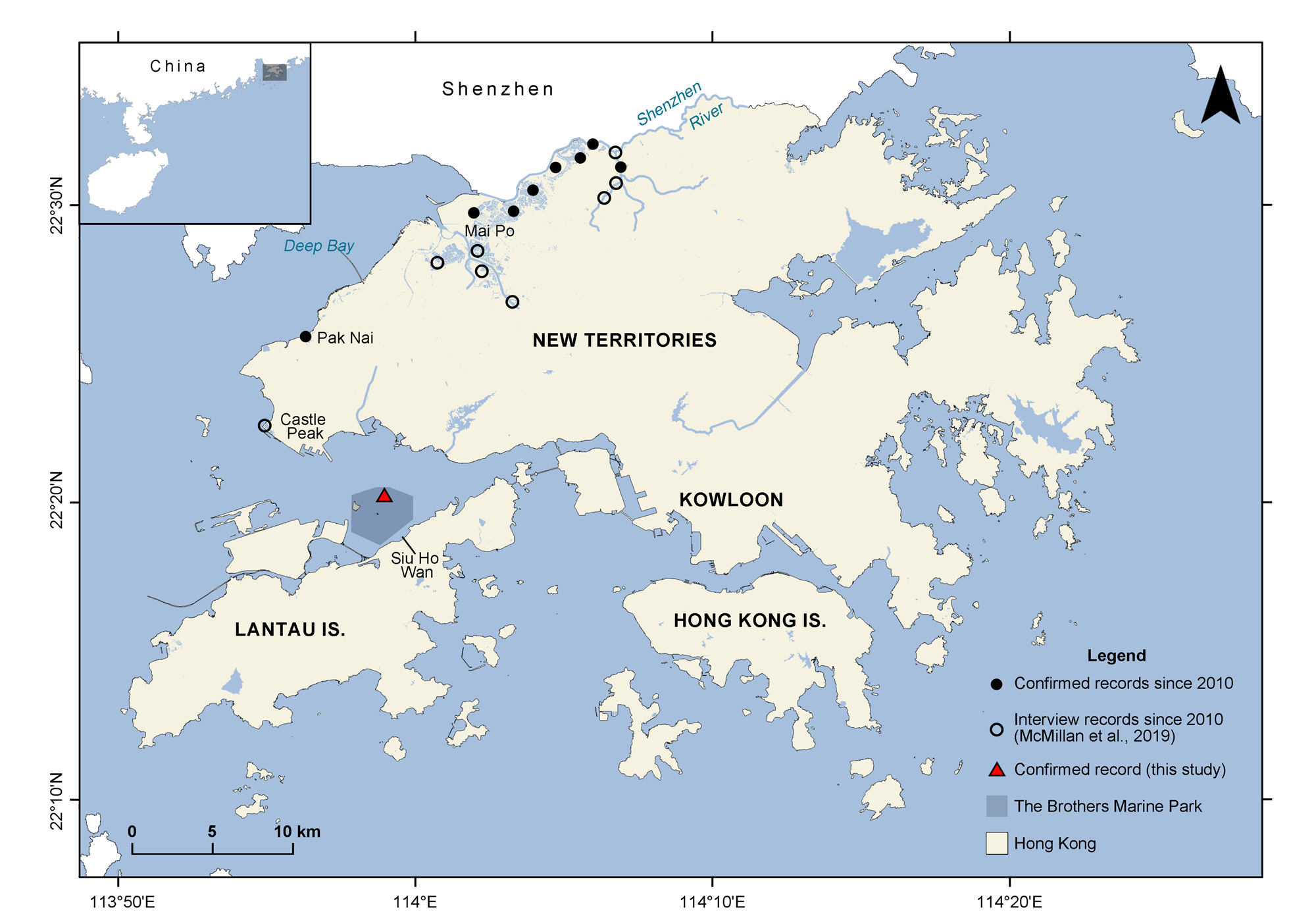
Following its rediscovery by ecologists at Mai Po in the 1980s, regular sightings prompted most local survey efforts to focus on that area. Since the launch of KFBG’s Hong Kong Otter Conservation Project in 2020, the current known range of otters has thus expanded to coastal wetlands, fishponds and even urban artificial channels from Pak Nai to Sheung Shui.
So, why have we turned our efforts toward Lantau Island?
In 2024, after more than half a century, KFBG’s otter research team unexpectedly rediscovered verified signs of a Eurasian Otter in the Brothers Marine Park in northern Lantau waters-well beyond the species’ current known range in Hong Kong. The finding has brought new hope for local otter conservation and raised a series of exciting questions: Does it mean that a still undiscovered remnant subpopulation managed to survive on nearby Lantau and moved among its surrounding waters? Was it a wandering individual from the northwestern New Territories that occasionally swam out to these small islands, which have no freshwater resources? Or does it represent natural recolonisation from the existing known otter population in the Deep Bay Area?
Lantau Island is less developed and still retains many natural habitats suitable for otters. Its coastline supports extensive, relatively undisturbed mangroves, estuaries and streams that offer ideal sanctuary, freshwater and food resources – and these habitats are well worth investigating further.


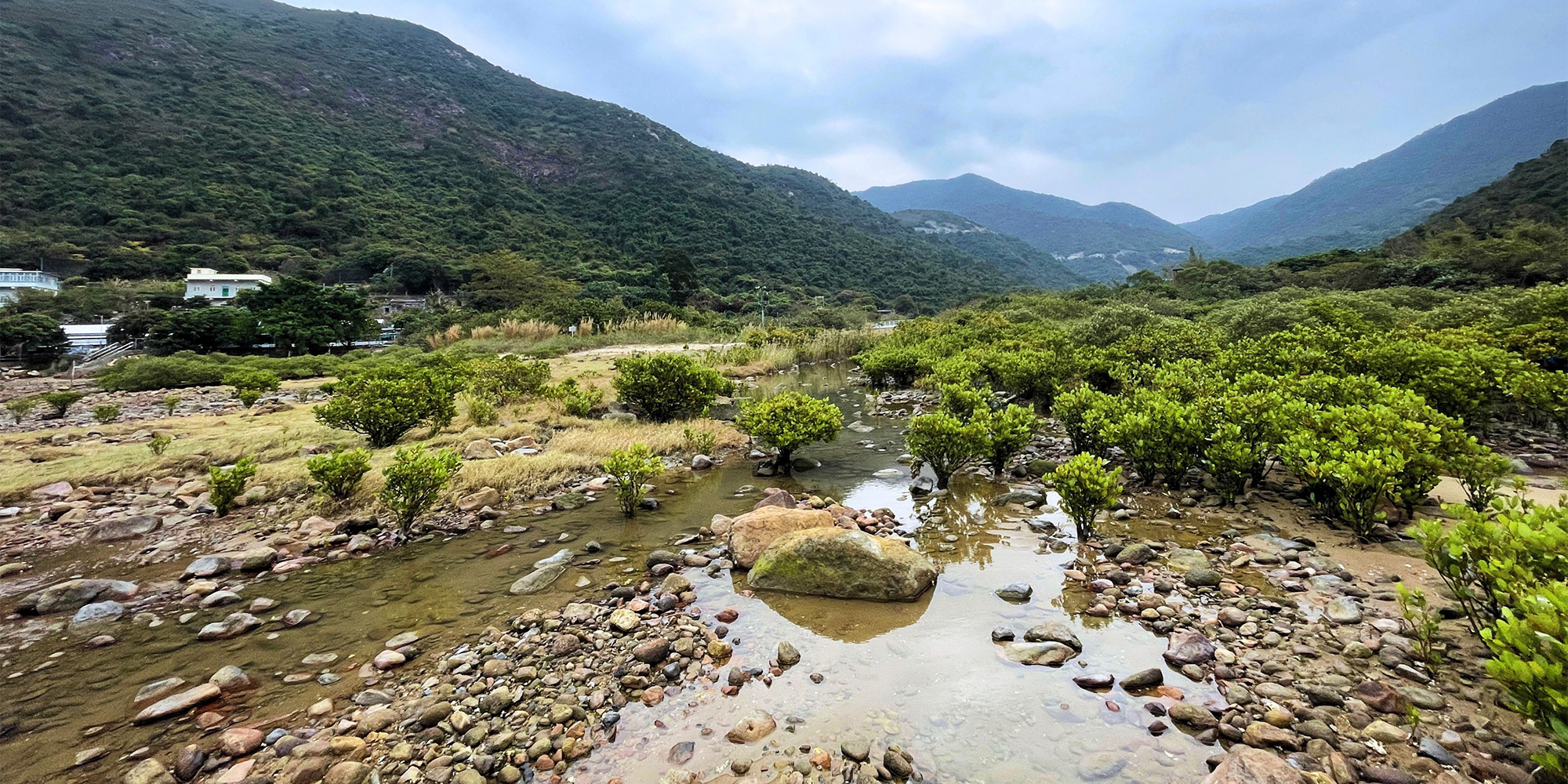

Lantau’s vast number of freshwater resources and relatively undisturbed natural environment make it ideal for otters.
Reference:
- Hui, M.K.Y. & Chan, B.P.L. (2024). Analysis of a 131-year longitudinal dataset of the Eurasian otter Lutra lutra in Hong Kong: implications for conservation. Oryx, 58(3), 387–395.
https://doi.org/10.1017/S0030605323001163 - Hui, M.K.Y., Leong, A.K.Y., Zhang, H., Yang, F., Yeung, H.Y., Lo, Y.F.P. & Yang, J.-H. (2024). Forgotten but not gone: Rediscovery of Eurasian otter Lutra lutra in Lantau, Hong Kong. IUCN Otter Spec. Group Bull., 41(5), 235–240.
https://www.iucnosgbull.org/Volume41/Hui_et_al_2024.pdf - Li, F. & Chan, B.P.L. (2018). Past and present: The status and distribution of otters (Carnivora: Lutrinae) in China. Oryx, 52(4), 619–626. https://doi.org/10.1017/s0030605317000400
Related article:
- New Study Shows Impending Otter Extinction Crisis in Hong Kong
- In search of the last otters of Hong Kong